



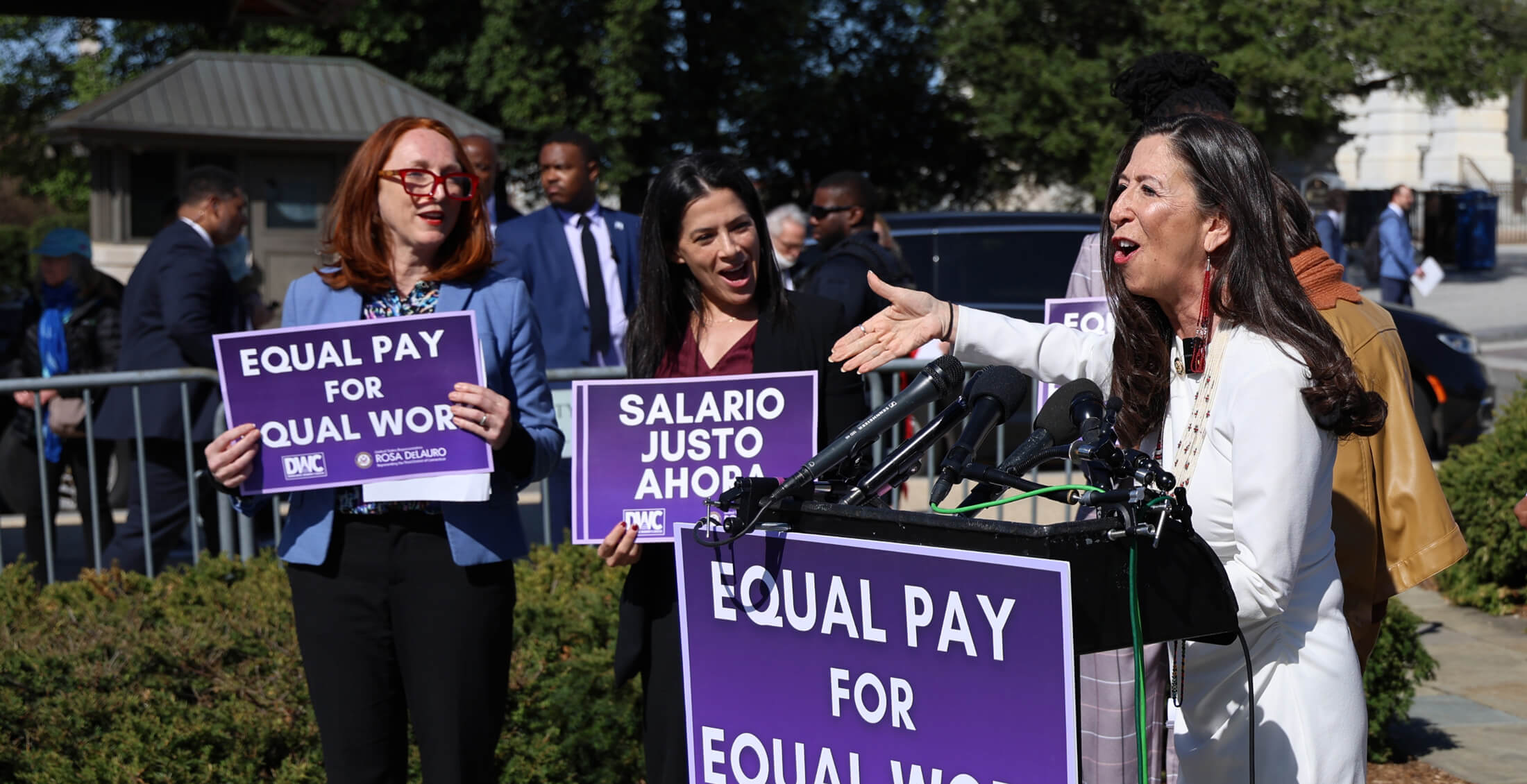
Dem Women’s Caucus & Reproductive Freedom Caucus Condemn Trump Admin’s Attacks on Health Care in HHS Proposed Rule
Washington,
March 16, 2026
WASHINGTON, DC – Friday, March 13, Democratic Women’s Caucus (DWC) Chair Teresa Leger Fernández (NM-03), DWC Vice Chair Hillary Scholten (MI-03), Reproductive Freedom Caucus (RFC) Co-Chairs Ayanna Pressley (MA-07) and Diana DeGette (CO-01), and RFC Vice Chairs Lizzie Fletcher (TX-07) and Norma Torres (CA-35) sent a letter to U.S. Department of Health and Human Services (HHS) illustrating the grave threat the department's latest proposed rule (CMS-9883-P) poses to women's health care. Specifically, the Members call out the rule’s failure to address the health care affordability crisis and how it limits health care access for women and families. The Members demand HHS revise the rule, and urge striking the provisions that would drive up health care costs and restrict women’s access to critical health care, including family planning care. The Members explained that the rule would strip affordable care from patients by promoting high-cost health insurance plans: “This rule is falsely advertised as a pathway to lower costs. In reality, this sweeping rule would increase costs by steering more individuals towards catastrophic insurance plans and raising out-of-pocket costs…This coverage may appear affordable on paper because enrollees’ initial premiums for such coverage may be lower—but leaves the enrollee exposed when they need care most. The proposed rule goes so far as to contemplate locking catastrophic insurance enrollees into this coverage for up to 10 years or more. Women and families deserve access to affordable, comprehensive health care coverage, not bare-bones coverage that forces them to gamble on their health.” The Members also highlighted that the rule would make it harder for women to afford care at their trusted health care providers: “Furthermore, this rule would continue to raise health care costs by forcing women to pay more for their trusted providers. Health insurance plans would not be required to maintain a robust provider network. These non-network plans would set a fixed payment for care. So, if a trusted provider charges above that rate, the enrollee must pay the difference out of pocket. Not only does this rule threaten the enrollee’s ability to stay with their trusted providers, they would have to calculate the exact charges they may incur. Placing this burden on the enrollee creates unnecessary red tape and leaves room for error. Overall, this rule forces two choices—pay more out of pocket to stay with a trusted provider or find a new one. When women believe they can access care without unexpected costs or network disruptions, they are more likely to seek preventive services and follow through with recommended treatment.” The Members concluded by demonstrating how the rule would threaten access to critical family planning care and how that care saves taxpayer dollars: “Additionally, this rule would roll back the very requirement that is actively improving access to cost saving family planning care. [The law] requires that Essential Community Providers (ECPs) be included in Qualified Health Plan’s (QHP) networks… These providers are essential to the reproductive health safety net and play a critical role in advancing public health. ECPs make it possible for low-income and medically underserved people to access critical preventive services like cancer screenings and birth control, which improve their health and lives. Those preventive services, so often made possible by public funding, also play a key role in lowering long-term health care costs for patients and for taxpayers. Every dollar of public funding invested in family planning saves seven future taxpayer dollars.” Read the full letter from leaders of the Democratic Women’s Caucus and Reproductive Freedom Caucus here. |