



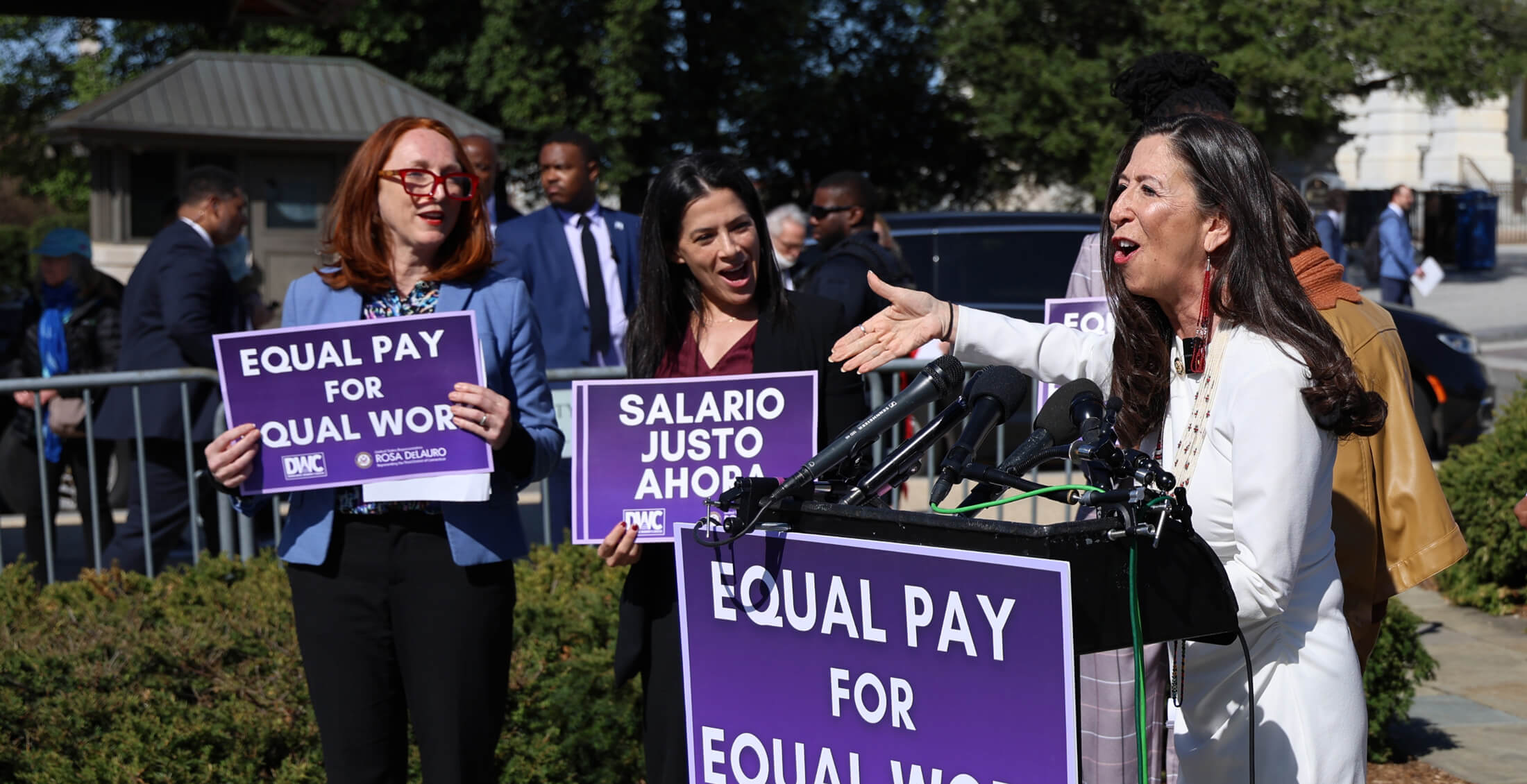
Amid House Republican Chaos, Dem Women’s Caucus Spotlights Mental Health Crisis Among Teen Girls at Shadow Hearing
Washington, DC,
October 19, 2023
Washington, D.C. —On Wednesday, the Democratic Women’s Caucus (DWC) held a shadow hearing, “Examining the Mental Health Crisis Among Teen Girls: Root Causes and Solutions,” chaired by DWC Policy Co-Chairs Rep. Ayanna Pressley and Rep. Kathy Manning.
***WATCH A RECORDING OF THE HEARING HERE*** ***SEE PHOTOS OF THE HEARING HERE*** On Wednesday, the Democratic Women’s Caucus (DWC) held a shadow hearing, “Examining the Mental Health Crisis Among Teen Girls: Root Causes and Solutions,” chaired by DWC Policy Co-Chairs Rep. Ayanna Pressley and Rep. Kathy Manning. Despite recent CDC data showing that nearly 3 in 5 U.S. teen girls felt persistently sad or hopeless in 2021—double the rate of teen boys and the highest level reported over the past decade—House Republicans have yet to hold a single hearing on the youth mental health crisis this Congress. Right now, teen girls are up against a wide variety of factors that can lead to mental health challenges—from increased sexual violence, the influence of social media, eating disorders, higher levels of stress, and more. But too often, girls do not have access to the mental health care and support they need, or face stigma in asking for help. These challenges are particularly steep for Black girls, girls of color, the LGBTQ community, non-English speakers, and other underserved communities. Even amid House Republicans’ inaction on mental health and continuing dysfunction in electing a Speaker, the DWC shadow hearing shed light on the youth mental health crisis and examined how investments in schools’ mental health supports, the mental health care workforce, and more can begin to reverse this troubling trend among teen girls. At the hearing, the members also discussed how House Republicans’ proposed cuts to mental health supports for students would only make this crisis worse. The hearing included expert testimony from Hannah Wesolowski, Chief Advocacy Officer at National Alliance on Mental Illness, Dr. Celeste Malone, PhD, MS, Associate Professor and School Psychology Program Coordinator at Howard University, Tami D. Benton, MD, President-Elect of the American Association of Child and Adolescent Psychiatry, and Mary Lawal, a youth mental health advocate, storyteller and student at Prince George’s County Community College. “The unprecedented hurt, harm, trauma, and grief that our young girls are carrying in their emotional backpacks is weighing on them, and this crisis demands congressional action,” said Congresswoman Ayanna Pressley. “I was proud to chair the Democratic Women’s Caucus’ hearing alongside Congresswoman Manning and continue my advocacy on behalf of young women and girls everywhere. Confronting the mental health crisis among teenage girls is going to require deliberate, intentional, and precise legislative action, and today’s testimony will help inform our work to support our LGBTQ+ youth, our girls with disabilities, and our girls of color.” “Earlier this year, the CDC released chilling reports that showed teen girls are experiencing increased rates of suicidality and depression, and drastic impacts on their mental health from exposure to social media. Our teen girls need urgent mental health help,” said Congresswoman Kathy Manning. “I co-led the Democratic Women’s Caucus shadow hearing on this heartbreaking phenomenon to address the root causes of this crisis and explore actions Congress can take to help improve the mental health of teen girls. I remain steadfast in my commitment to address the youth mental health crisis.” Additional testimony from the witnesses includes: The pandemic exacerbated an already acute mental health crisis among teen girls.
Underserved communities—including Black girls, girls of color, LGBTQ community, non-English speakers, and others—face steeper barriers to accessing mental health care.
Young women benefit hugely from having mental health supports at school.
Teen girls are facing a wide variety of factors that can lead to mental health challenges—from increased sexual violence, the influence of social media, eating disorders, higher levels of stress, and more.
Congressional action is critical to solving the mental health crisis.
### |